
Beginning this month, I’m adding back a blog post each month on current events. This month my additional topic is on scams and email fraud. It’s been a while since I wrote about being safe in cyber world, and I can’t think of a better topic to start out with. I’ve included texting in this topic, as those taking advantage of others through digital communication don’t care if you fall for a scam by email or by text.
What to Watch For
To protect ourselves from scams, there are a few things we can do to be sure the communication we’ve been sent is legitimate. Mostly, we can ask ourselves questions when something looks or sounds suspicious. By doing this, we can put it to the test.
Does this email or text look real? If an email or text seems suspicious, it probably isn’t something we want to click on. If the email address or text number looks questionable, it is probably a scam. It will either ask you to do something – direct you to click on an unknown website link, ask you to update personal information, or to verify you are who you are.

Did this message come from a trusted source? If an email, text, or message is not legitimate, there will be something about it giving you warning signs. And a questionable communication can be validated by looking at the originating source. Do you recognize the email address? When you hover on it, does it match up with the name shown?
Also, and often, scammers talk to you in their emails, texts, or messages as if they know you. But they don’t. The writing is almost too friendly, yet not anything your family or friends would say to you.
How can I be sure this communication is legitimate before clicking on it or deleting it? It is important to realize we don’t have to click on any email or text we are not comfortable with. It is even more important to seek guidance from others in determining if an email or text is valid or not.
Just the other day, I received a text from what look liked the U.S. Postal Service. It told me it couldn’t deliver a certain package to me and to click on the link to update my current address, so the package could be delivered before being returned to the sender. The first thing I did was go to the local post office and ask the postal clerk about it. I had saved the text and showed it to the clerk. Just as I suspected, the U.S. Postal Service does not send texts to individuals. Even though the text had what looked like a real logo or emblem, it was indeed spam.
Why Does Spam Happen?
There are many reasons why spam happens. The most common are to steal your personal information for use in identity theft, to get you to spend money on something you wouldn’t normally, and to learn your user names and passwords to steal your hard earned money.
This can happen by getting you to divulge your information by providing information when verifying they have your information correct or by slipping into your computer or phone when you click on the link they provided. It helps to know the why and the how, so that we can better arm ourselves against unwanted intrusions.
How to Educate Oneself
I believe in trusting my gut and going to the source. If anything, I Google the content in question to see if the content or source is real. I encourage others to never be afraid to ask a friend. Often, someone we know has been the victim of an email scam; this also includes texts or social media messages. According to Charles Griffiths of AAG Security, 323,972 Internet users fell victim to phishing. What is phishing? It’s a type of scam that targets online consumers through email which looks like it is from a trusted source. This means you can get these communications from just about anyone you do business with. It could be your bank or your favorite store – but it’s not, not really.
At my prior employment and now again at my current job, a popular email would be from our boss. The email (or text) would sound just like our boss would, just as if he was sending the email himself, but it wasn’t him. There are questions you can ask yourself to make sure one doesn’t fall for the request in the email, which is usually to send money:
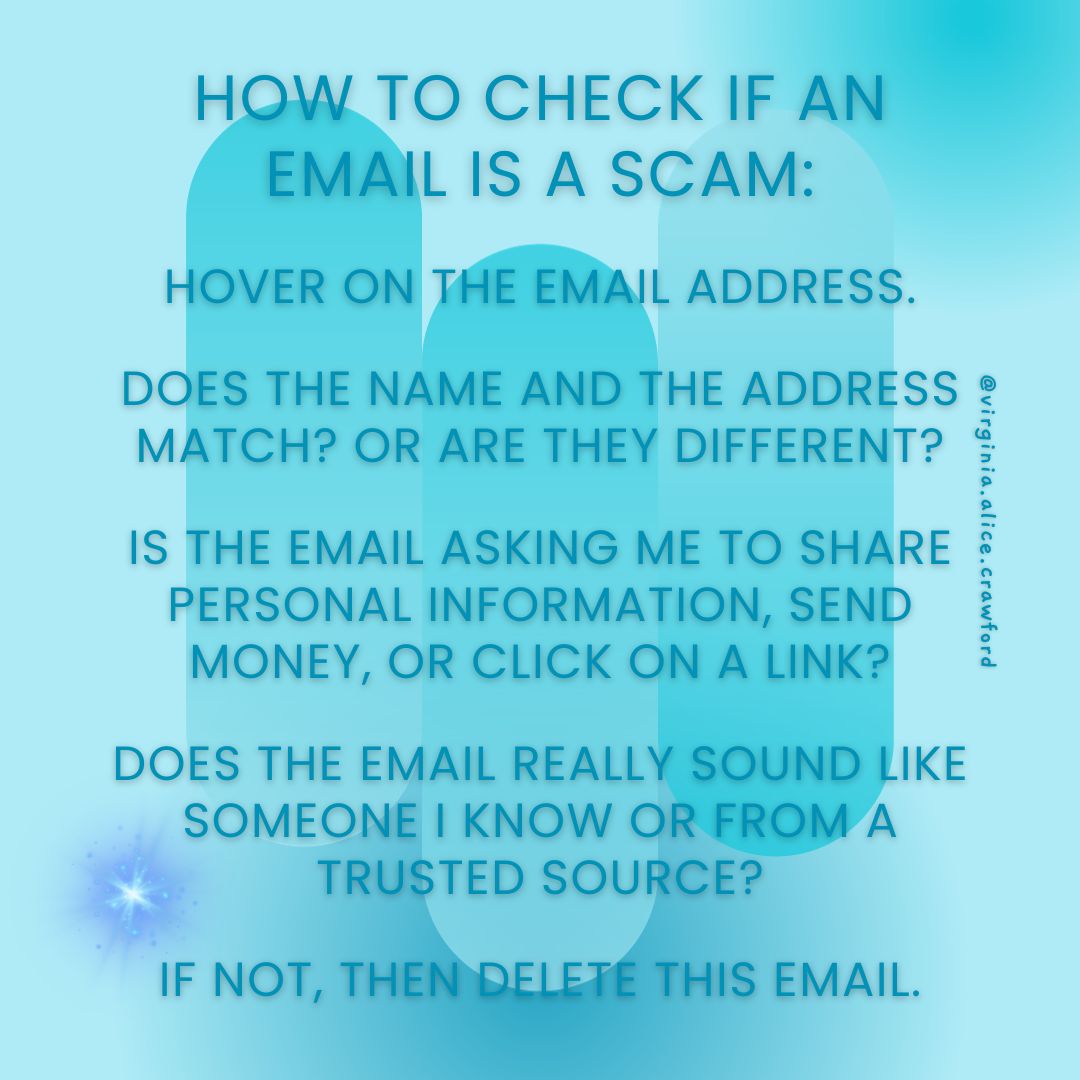
- Is my boss really out of town?
- Would my boss ask me to do this? Or would he/she ask someone else?
- Is this request coming from my boss’s usual email or phone number? (Hover to see the email source.) And, finally,
- call the office or ask him with a call or text? (The number the spammer is using won’t be the same.)
If It’s a Secret, Is It Real?
Now that scammers are using phone calls to scam persons, it gets more difficult to tell them apart from the real person.
Sometimes, we just have to trust our gut, and go back to the basics. If a source asks us to not tell anyone, we should see this as a red flag. Why wouldn’t our boss, or anyone else we know, want us to seek help for them?
The key is to determine if the email or text is real or not, then block it, if possible.
Tips for Action
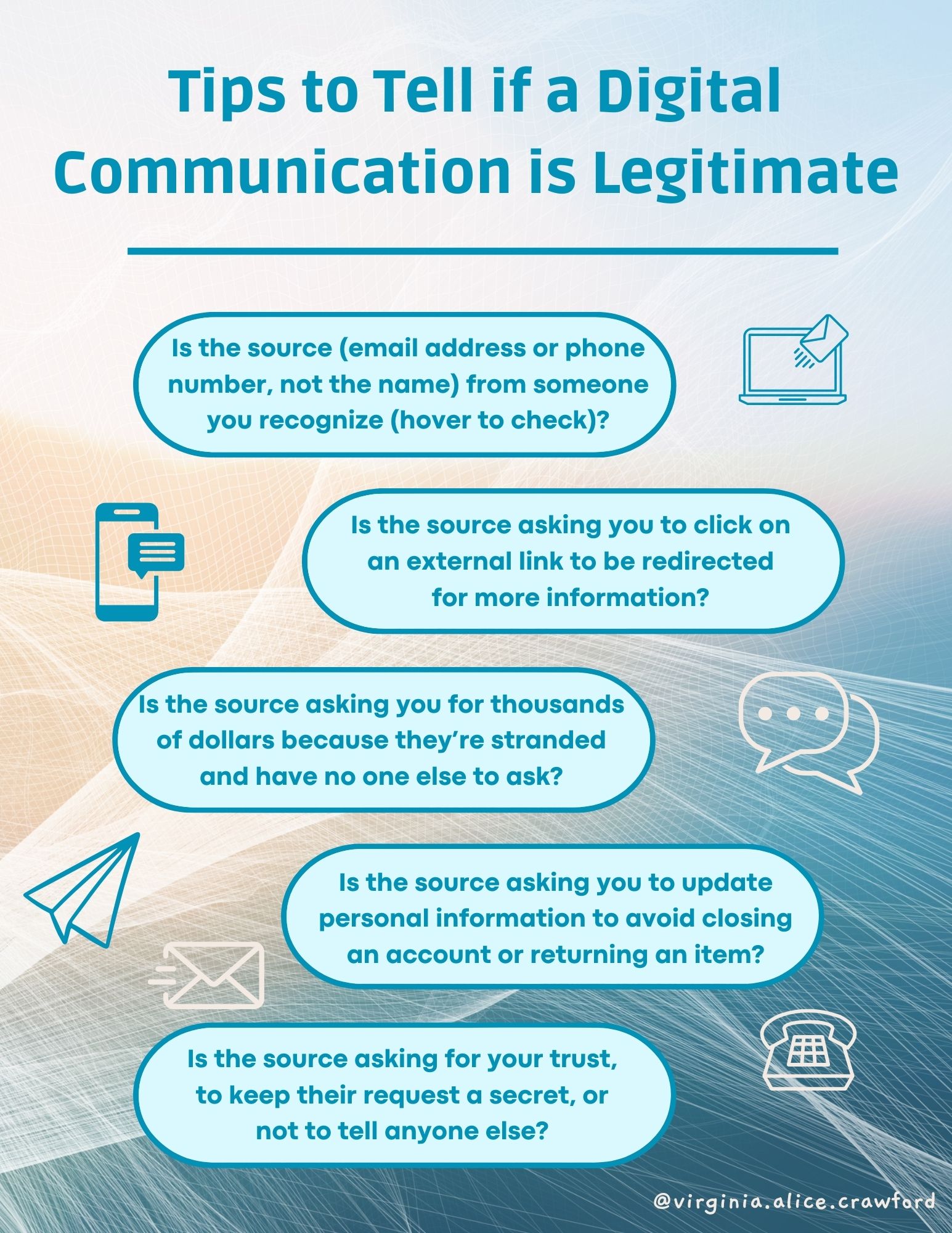
The best way to arm ourselves is to educate ourselves for action. I love lists, so I’m sharing this one with you. How-to tips for determining if a digital communication (email, text, social media message) is real or not:
- Is the source (email address or phone number, not the name) from someone you recognize (hover to check)?
- Is the source asking you to click on an external link to be redirected for more information?
- Is the source asking you for thousands of dollars because they’re stranded and have no one else to ask?
- Is the source asking you to update personal information to avoid closing an account or returning an item?
- Is the source asking for your trust, to keep their request a secret, or not to tell anyone else?
Keeping Perspective
If you think about it, none of us are new to scams. Most of us still receive scam mail in our snail-mail boxes right outside our home or at the post office. And, from the time we were in kindergarten, someone has always tried to get us to fall for some silly, unbelievable story. The difference is, for some unknown reason, digital technology intimidates us. This one little thing keeps us from arming ourselves with the ammunition we need to not fall for digital scams.
Educating Ourselves & Others
So, how do we become less intimidated and more knowledgeable in this fight against being scammed?
First, we embrace the reality that digital technology is here to stay. We may dream of days when life was simpler and all we had to do was tear up an unwanted piece of mail. Technically, we can still do the same thing today. All we need to do is follow a new routine.
This means we need to know which emails to keep and which ones to send to trash. If we are fully aware of what our “good” emails should look like, then we can spot those emails which are spam (or scams). And the key here is to be judicious and not let scammers take advantage of us. If the email looks wonky, it more than likely is and should be deleted right away.
The problem is some of us become attached to our emails. This makes it more difficult to discern when we are potentially being scammed.
Most importantly, we should educate ourselves on how to spot spam, phishing or scam emails, or any questionable digital communication whether email, text, or social media message. It is our responsibility to educate ourselves and those more vulnerable than us like our parents and grandparents or older friends.
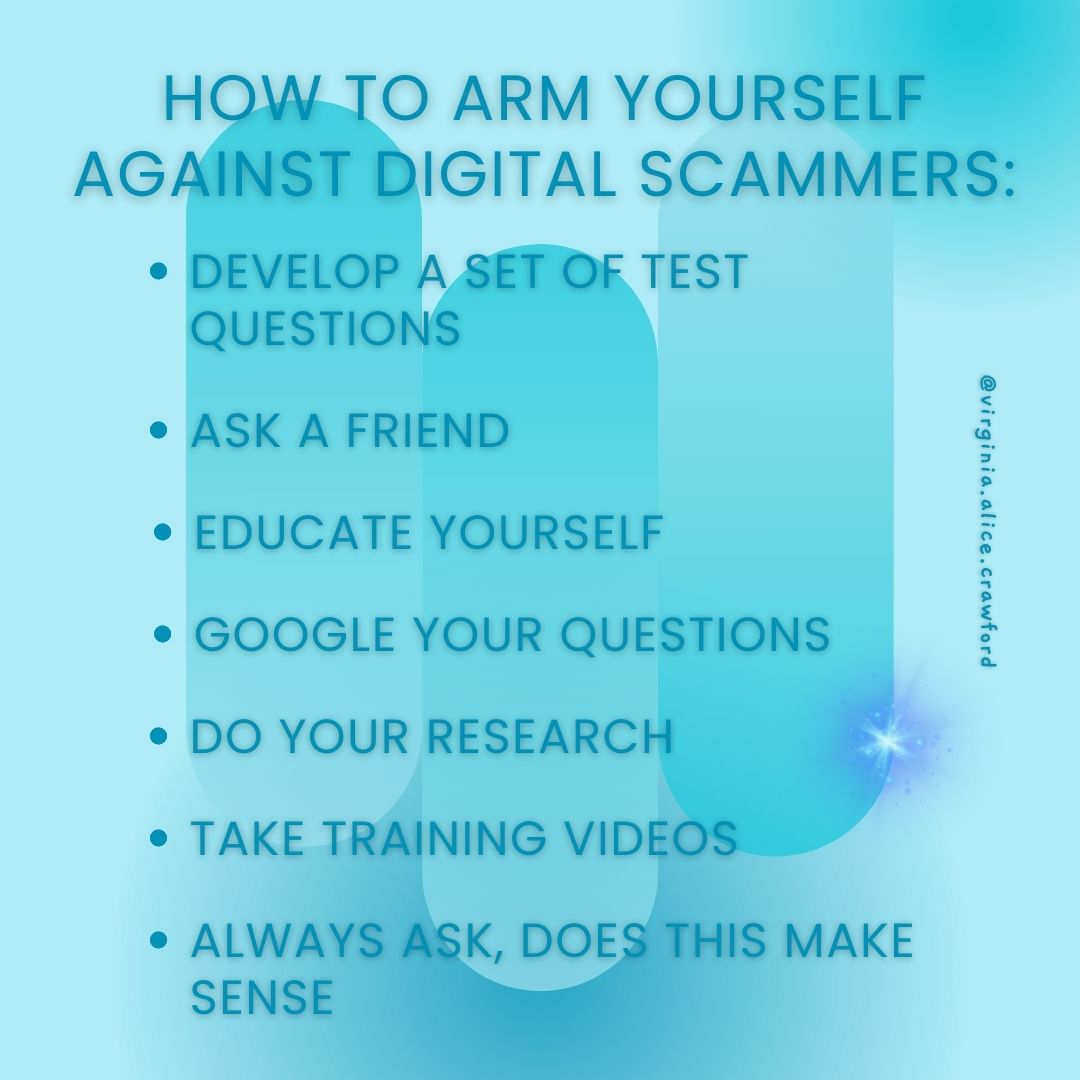
I cannot imagine trying to blame anyone else for not knowing better. In today’s cyber world, we must learn how to protect ourselves and our loved ones from digital scammers.
Sharing Experiences
One of the best ways to protect each other is to share our experiences with others. Pass the word. Share what happened, or almost happened, so that it doesn’t happen to anyone else, a loved one, a co-worker, or even a stranger. The one thing scammers are counting on is our embarrassment about what happened or almost happened to us.
Scammers are also counting on companies not including emails, texting, and social media messages in their cyber security trainings. I mean, come on, doesn’t everyone already know about email scams? Not enough. No one has brought it down to a one on one, personal, this could really happen to you, and what this could mean to the average person like you and me.
So, the next time it happens – or almost happens, shout it from the roof tops. Blog about it. Develop training manuals for your company. Include it in your weekly staff meetings.
Arming Ourselves Against Scams
By making email scams, phishing, or spam a part of our daily conversation, we can normalize the first course of action against being scammed: confidence in deleting suspicious emails, texts, or messages. If there’s one thing I’ve learned about learning new computer apps, it’s that the more time you spend in the app, the more confident you become using it.
The same thing goes for email apps. I recently changed emails at work as well as personally. The new email apps are unfamiliar to me. But I know the more I use them, the more they will become familiar to me. And the more confidence I will gain from becoming familiar with how they work.
The good thing is many email apps have great security measures to spot and delete phishing emails before they even hit our inboxes. The bad thing is even the savviest scammer can break that barrier of protection. This is when it is up to you and me to protect ourselves by learning what spam can look like.
I believe we can all become better at deleting suspicious emails, those from sources we don’t recognize, those that coerce us to do something – either click on a link that looks questionable or share information to avoid closing an account we don’t remember having or having an item we don’t remember ordering sent back. If we don’t recognize it or remember it, it’s more likely a scam.
Let’s not fall for anything that looks questionable and start trusting ourselves more. Another thing I believe scammers count on is us doubting ourselves. Don’t let them intimidate you or doubt yourself. Have the confidence to know when an email is not to be trusted. We can do this.
This blog is brought to you by my overwhelming desire to educate all of us on not being taken advantage of by those who have nothing better to do than take advantage of the vulnerable. So, let’s learn what we can about being safer in the our digital world – and sharing our knowledge with others.
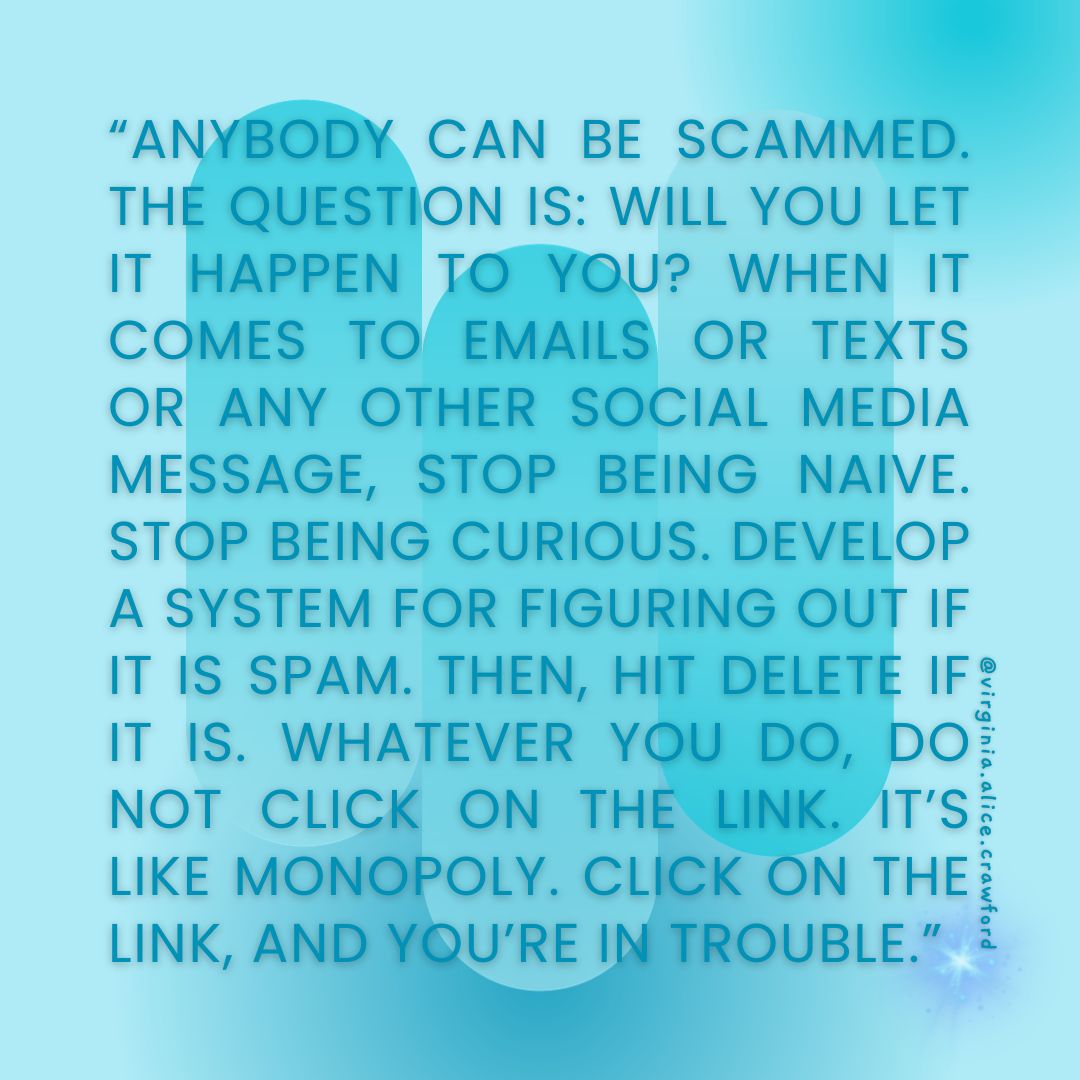
And the quote card is mine. I couldn’t find an adequate quote about email scam, so I made one up. And, yes, curiosity is another one that causes grief. If anything, click reply and tell the scammer not to send you anymore spam, then block the email. You may get more spam but not from that email (or text).
If you think this information will help someone, please share it with them. I constantly hear of stories where elderly loved ones have fallen for some email or text gimmick, or even on Facebook. My blog may be a bit long, but sometimes someone just needs to hear the information in different ways to get the full meaning of what they need to do — delete the email, text, message. It serves no purpose except to the sender of which hundreds of thousands email spam have been sent out. We have to stop letting ourselves be a victim to email or text scams and start standing up for ourselves and one another.
Until next time, keep smilin’, keep learnin’, and keep lookin’ up!
Hugs, Virg
Note: My next blog will be toward the end of the month about how to forgive those things which keep haunting us – whether it is something we did or was done to us. No working title yet, but it will come.
 Virginia Alice Crawford